
What No One Explains about US College Admissions, Part 2
RL
In some countries, there is no question about which schools are better than others. In the U.S., rankings are published by private media companies; each ranking uses different criteria. This is why you may see a university ranked differently between different publications.
There is no official ranking of U.S. universities; instead, each ranking is published by a different media company, with differing methodologies.
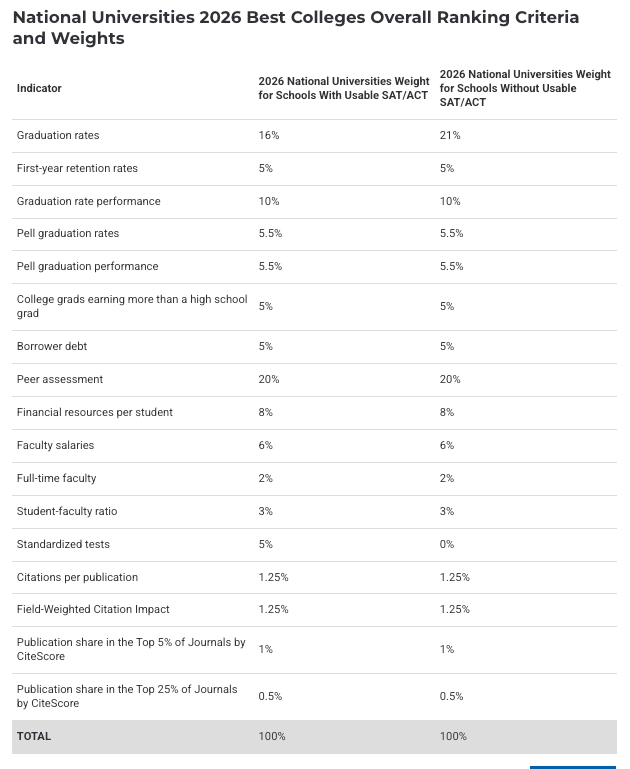
The most popular ranking is released by U.S. News & World Report. Here are the criteria it uses:
Now consider the criteria for another popular ranking, from Niche:
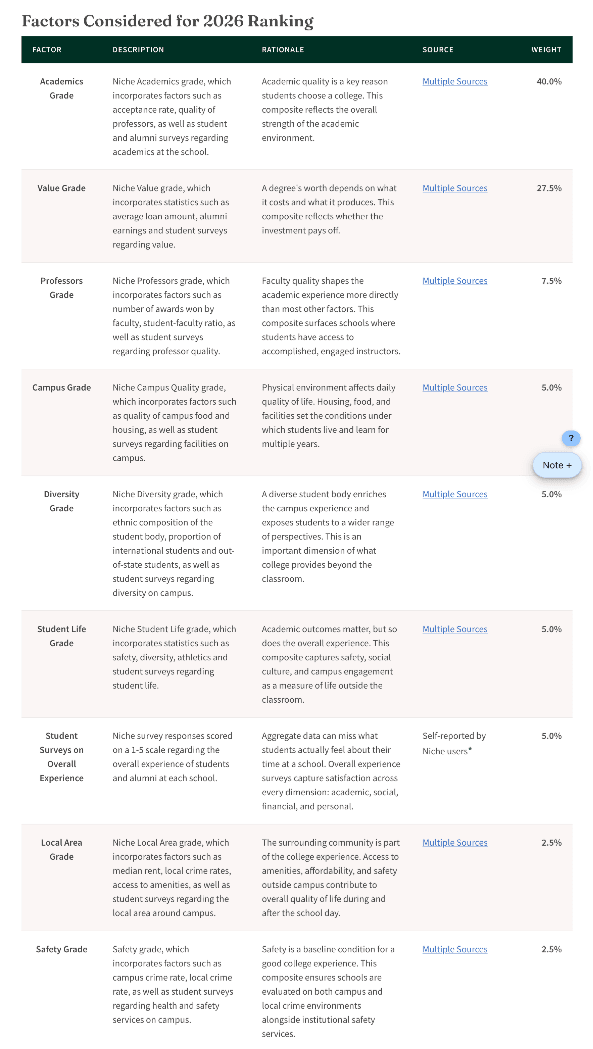
Notice that these publications are measuring different things. Niche includes campus quality, ratings on the surrounding area, and student surveys on overall experience in its rankings; U.S. News weighs peer assessment, standardized tests, and several measures of research impact. The point here is that different publications have different criteria for excellence. Consider the rankings criteria when reading these publications with your child.
Across rankings, broad tiers of universities will remain fairly consistent. In other words, the likes of Harvard and Johns Hopkins will generally be ranked above Temple University or Fordham University. Therefore, the rankings become less helpful in evaluating universities that are academically similar.
What does this mean for my student?
1. Rankings are a useful starting point for researching universities because they summarize many factors. In choosing which schools to apply to, your student should consider rankings as well as other factors that would best set him or her up for success: average class size, undergraduate research opportunities, internship placement, and others.
2. The role that rankings play in future employment are more indirect than direct. Rankings measure universities; employers hire people.